
Build Trading Algorithms with AI.
No Coding Required
The premier environment to create, backtest, and deploy sophisticated trading algorithms using AI, with plain English prompts.
Dual-Engine Architecture.
Total Control or Absolute Automation.
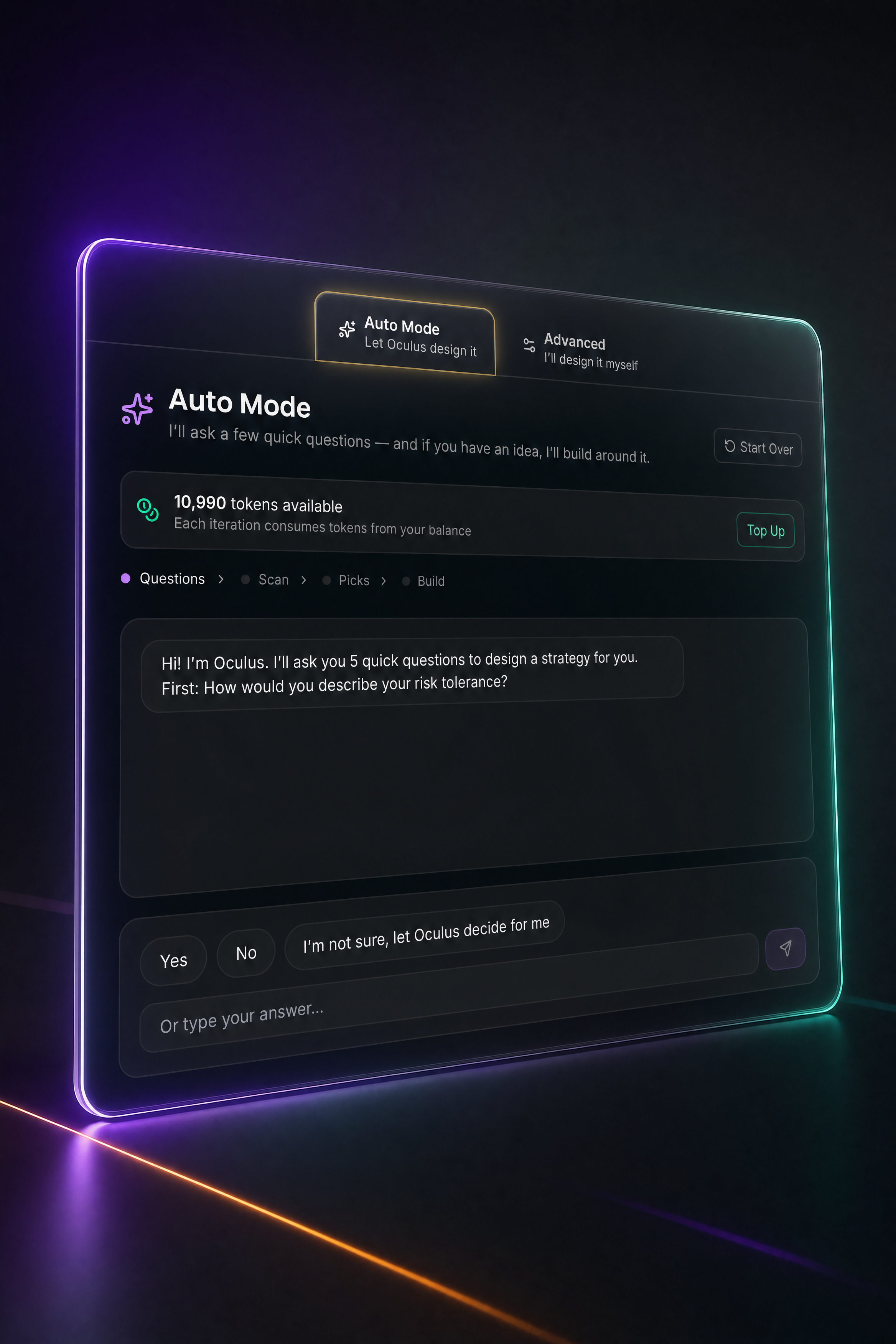
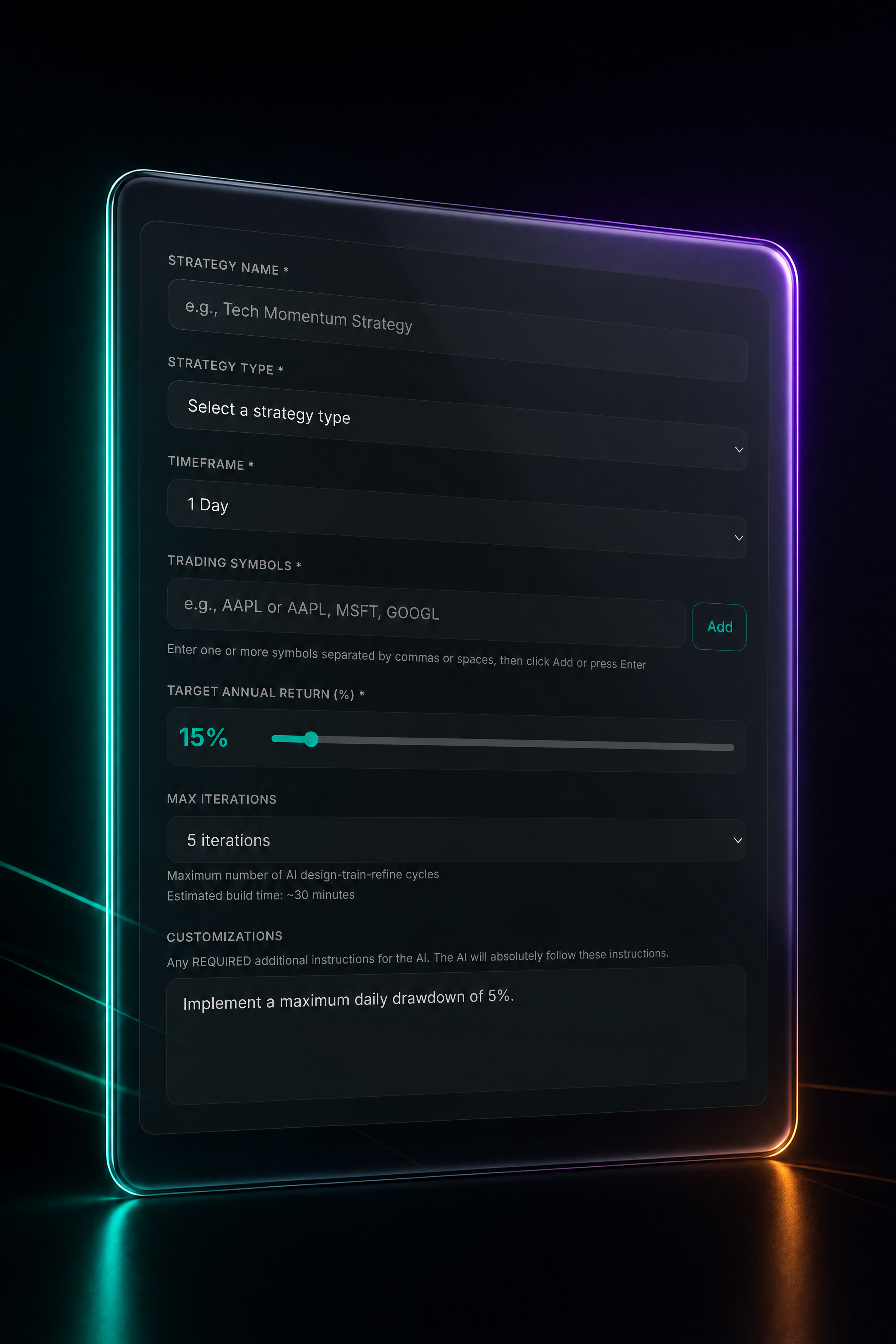
Whether you have a strict quantitative concept in mind or want our AI to architect one for you, Oculus adapts seamlessly to your workflow.
Auto Mode
Let Oculus design it
Advanced
I'll design it myself
Initiate. Observe. Refine.
The moment you hit build, the engine engages. Experience unprecedented transparency as Oculus architects your logic from the ground up.
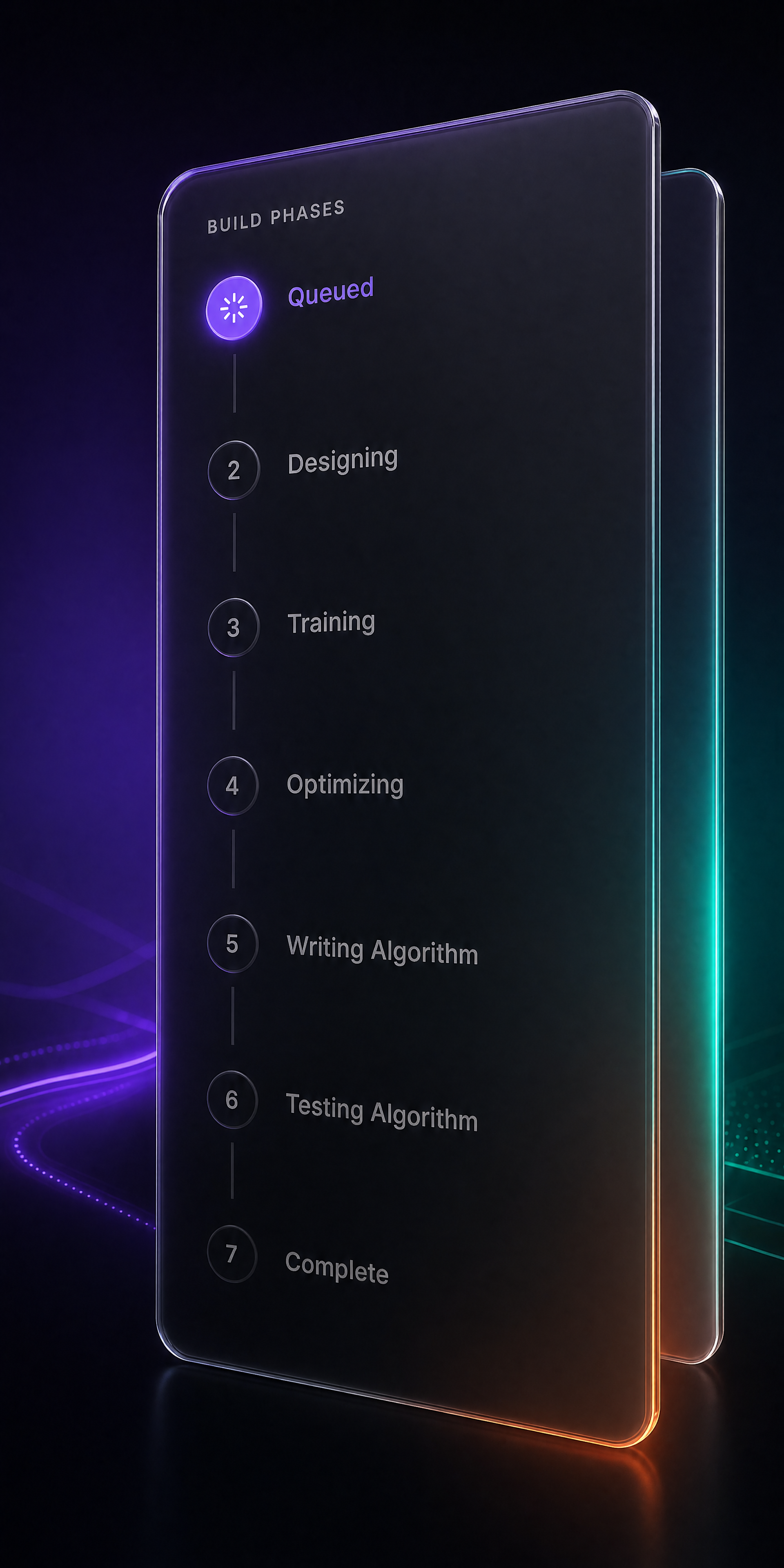
Track The Architecture
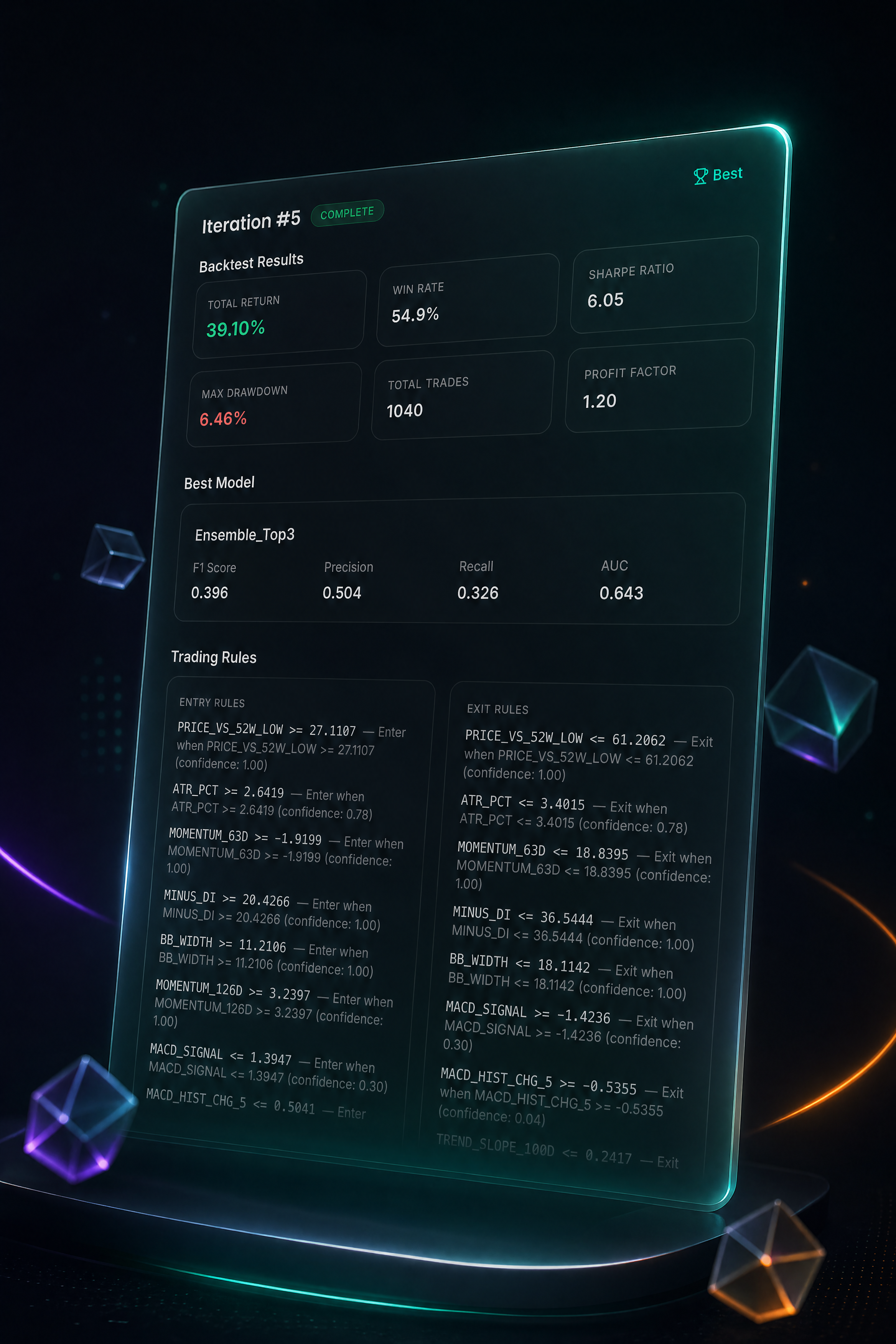
The moment you hit build, the engine engages. Track the exact stage of your algorithm's development in real-time. From data fetching to container deployment, there are no black boxes—just clear, verifiable progress.
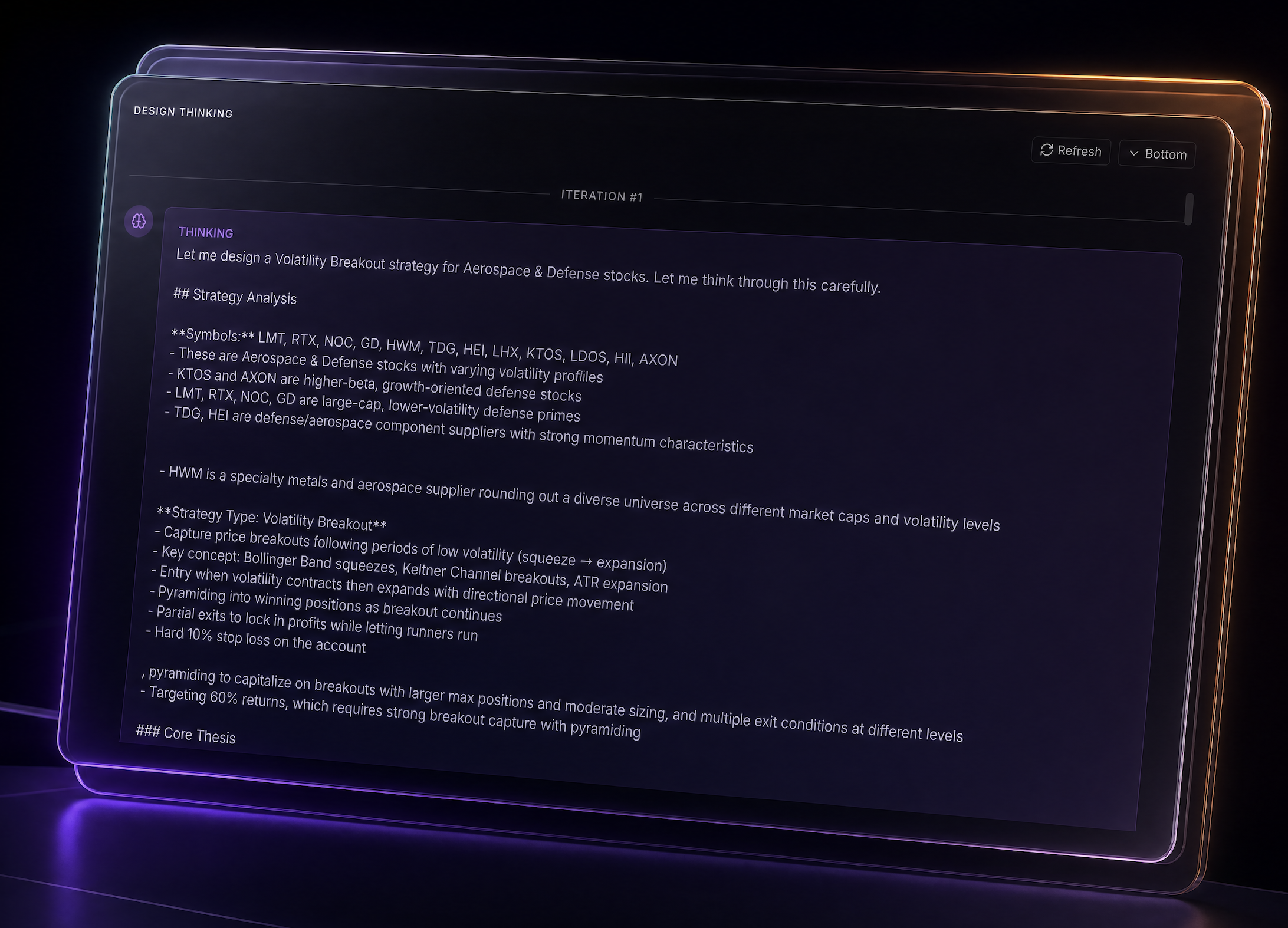
Real-Time Processing
Watch the AI work. View the neural thinking and architectural design process as it happens. Oculus builds the mathematical logic step-by-step, ensuring every decision is mathematically sound and entirely visible to you.
Verify Your Edge
Evaluate the potential of your strategy while it is still building. Review comprehensive performance metrics for every single iteration. Get a detailed breakdown of the exact indicators utilized and how that specific iteration performed across historical backtesting data.
Beyond the Build.
Absolute Validation.
When the engine finalizes your architecture, Oculus provides a transparent, institutional-grade breakdown of the strategy's exact capabilities and historical edge.
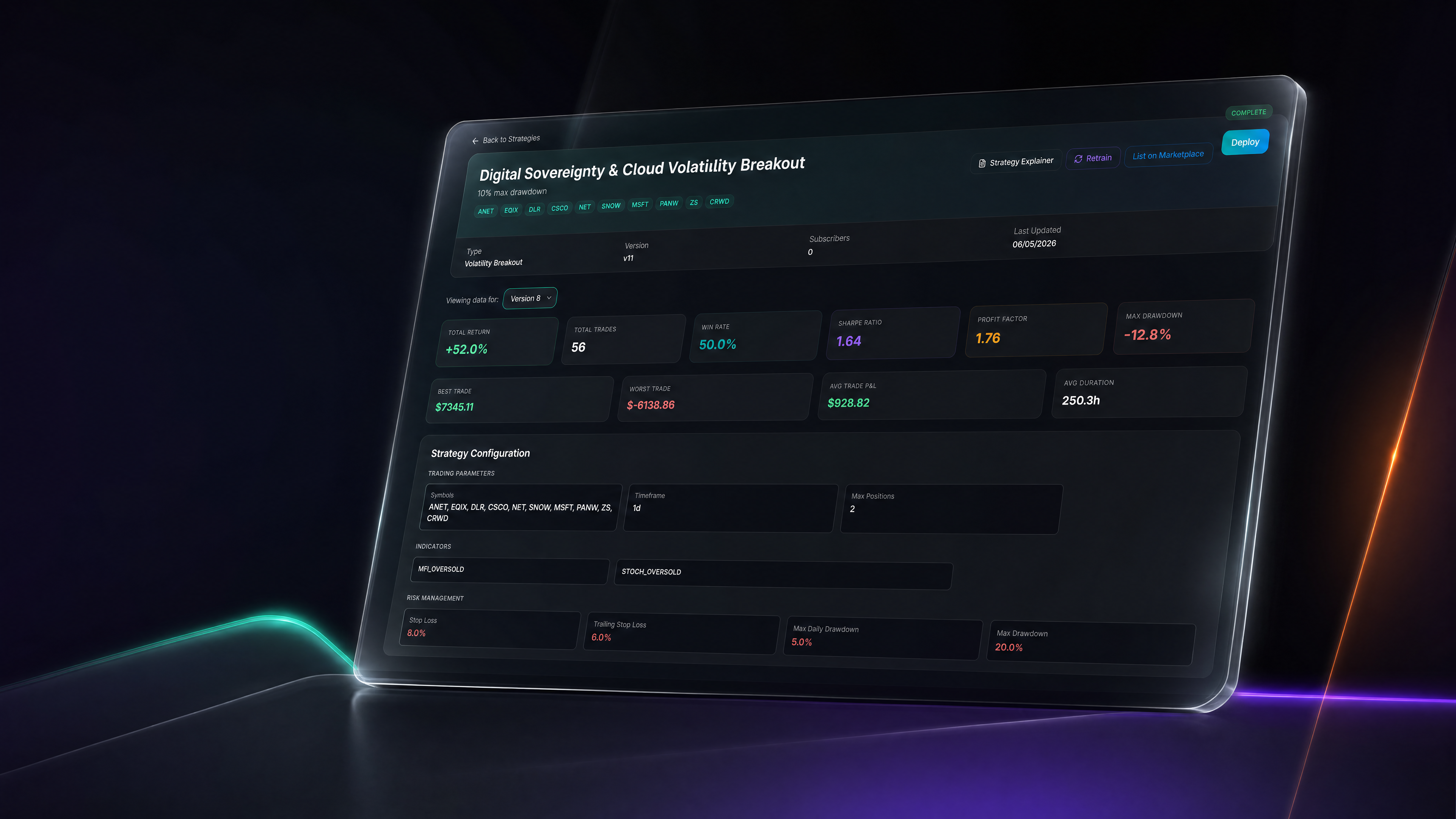
Complete Strategy Profile
Instantly assess the viability of your newly minted algorithm. Review top-level metrics including total return, maximum drawdown, win rate percentages, and overall profit factor across the entire historical dataset.
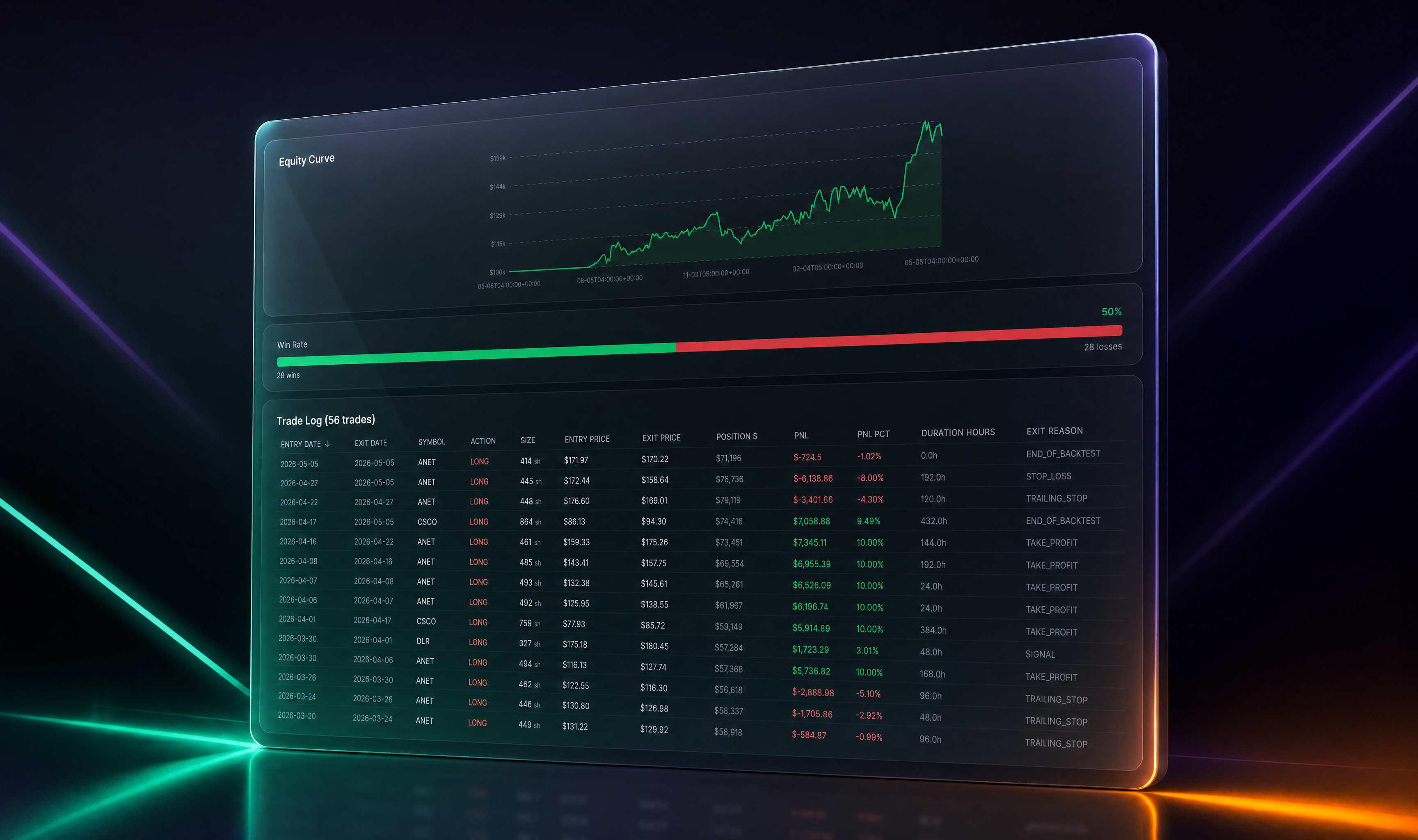
Equity Curve & Trade Logs
Zoom in on the exact execution history. Trace the strategy's equity curve visually, and analyze a comprehensive, line-by-line log of every historical trade triggered by the algorithm.
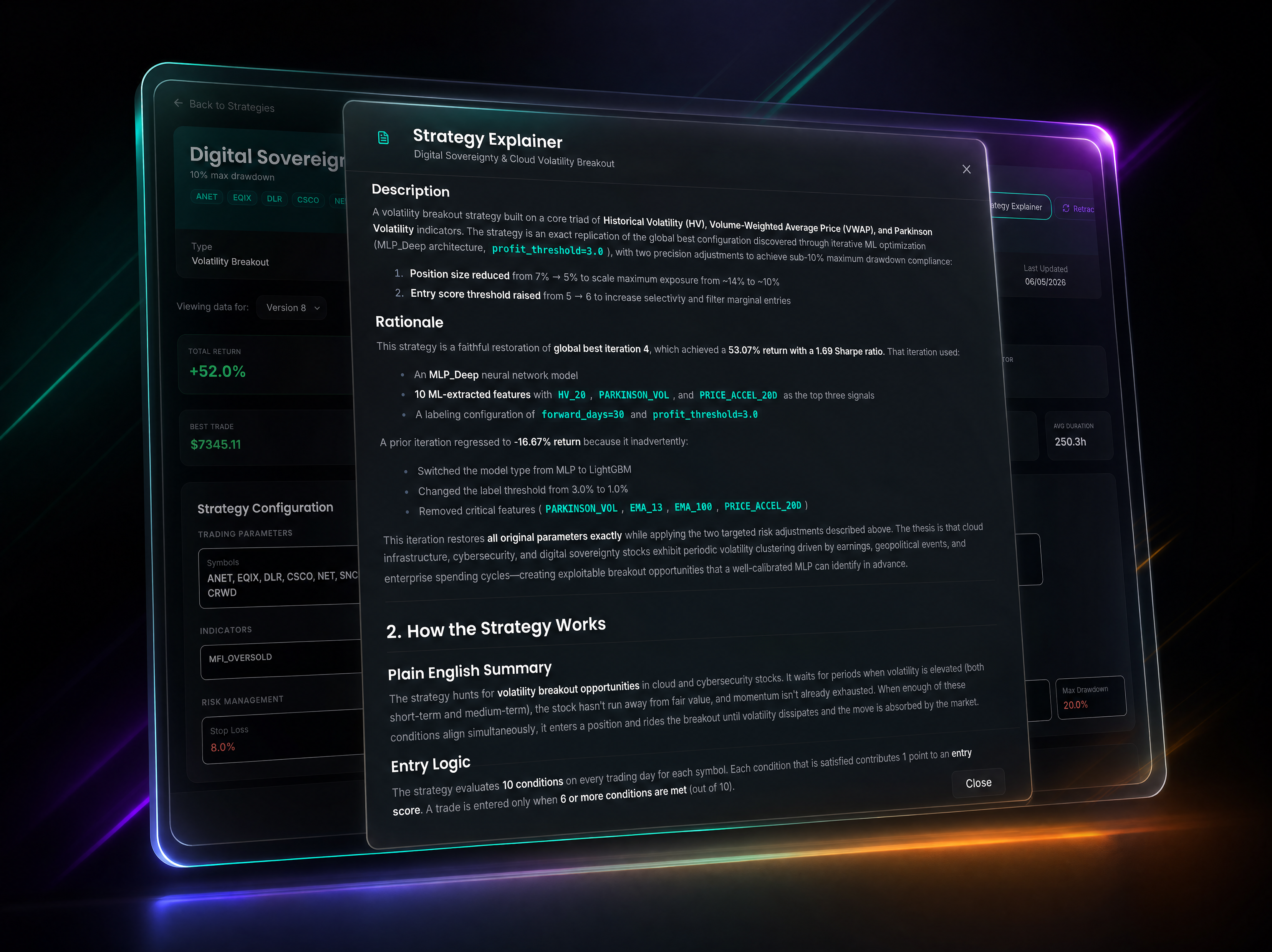
Detailed Explainer
Never trade a black box. Read a complete breakdown of exactly how your strategy operates, translated directly into plain English and precise technical parameters.
Seamless Deployment.
Execute your logic exactly how you want it. Oculus partners natively with tier-one infrastructure platforms for direct, hands-off automation.

SignalSynk is a direct partner of Oculus Algorithms, providing a robust automated trading platform. Users can connect their U.S. brokerages, securely deploy their custom-built Oculus algorithms, and execute trades completely hands-free.
Deploy via SignalSynk

Atlas Trade AI offers an automated ecosystem equipped with pre-built algorithms and dedicated human support. Atlas clients can host any Oculus strategies they build for free, enabling flawless execution through integrated U.S. brokerages.
Deploy via Atlas
SPIKE Options is tailored specifically for derivatives automation. Each SPIKE package comes with a set number of Oculus tokens that reload monthly, making it the premier choice for options traders constantly tweaking and shifting strategies.
Deploy via SPIKEFrequently Asked
Questions
Everything you need to know about the Oculus ecosystem and algorithmic architecture.
How are payments and token top-ups processed?
All financial transactions, including monthly subscriptions and on-demand token top-ups, are securely processed via Stripe. We support all major credit cards, Apple Pay, and Google Pay for seamless infrastructure scaling.
What are tokens and how are they used?
Tokens represent the computational power required for OCULUS to iterate on your strategy. Each time you ask the AI to "Pivot" or "Re-optimize" a strategy, tokens are consumed to power the thousands of backtest simulations and data-point references required.
Do I really need zero coding skills to use Oculus?
Correct. OCULUS is built on a natural language interface. If you can articulate your market thesis in English, the engine can architect the quantitative code, manage the Docker containers, and handle the API execution for you.
Is my strategy logic kept private?
Sovereignty is a core pillar of Oculus. Your strategies are stored in strictly encrypted environments. Your trading logic remains your private, highly secure intellectual property at all times.
How does the "Secure Docker System" work?
When you deploy a strategy for personal use, OCULUS wraps the algorithm in a sandboxed Docker container. This ensures your code is isolated, secure, and can execute 24/7 without being affected by external infrastructure changes.
What kind of data does Oculus reference?
OCULUS references thousands of data points including historical price action, macro-economic indicators, sector correlations, and micro-structure order flow to ensure every iteration is battle-tested against multiple market regimes.
Can I build strategies for entire sectors?
Yes. You can prompt OCULUS to trade specific baskets or sectors (e.g., "The top 10 S&P Tech stocks"). The AI will manage the weightings and correlations across the entire sector automatically.
What happens if my strategy doesn't hit its targets?
If a re-optimization cycle fails to meet your defined drawdown or return parameters, OCULUS logs the failure, analyzes why the target was missed, and prepares a new "Chain of Thought" for a subsequent iteration.
How long does a typical iteration take?
On average, a deep strategy iteration takes roughly 60 minutes. This time allows the engine to run exhaustive simulations across years of historical data to ensure mathematical validity.